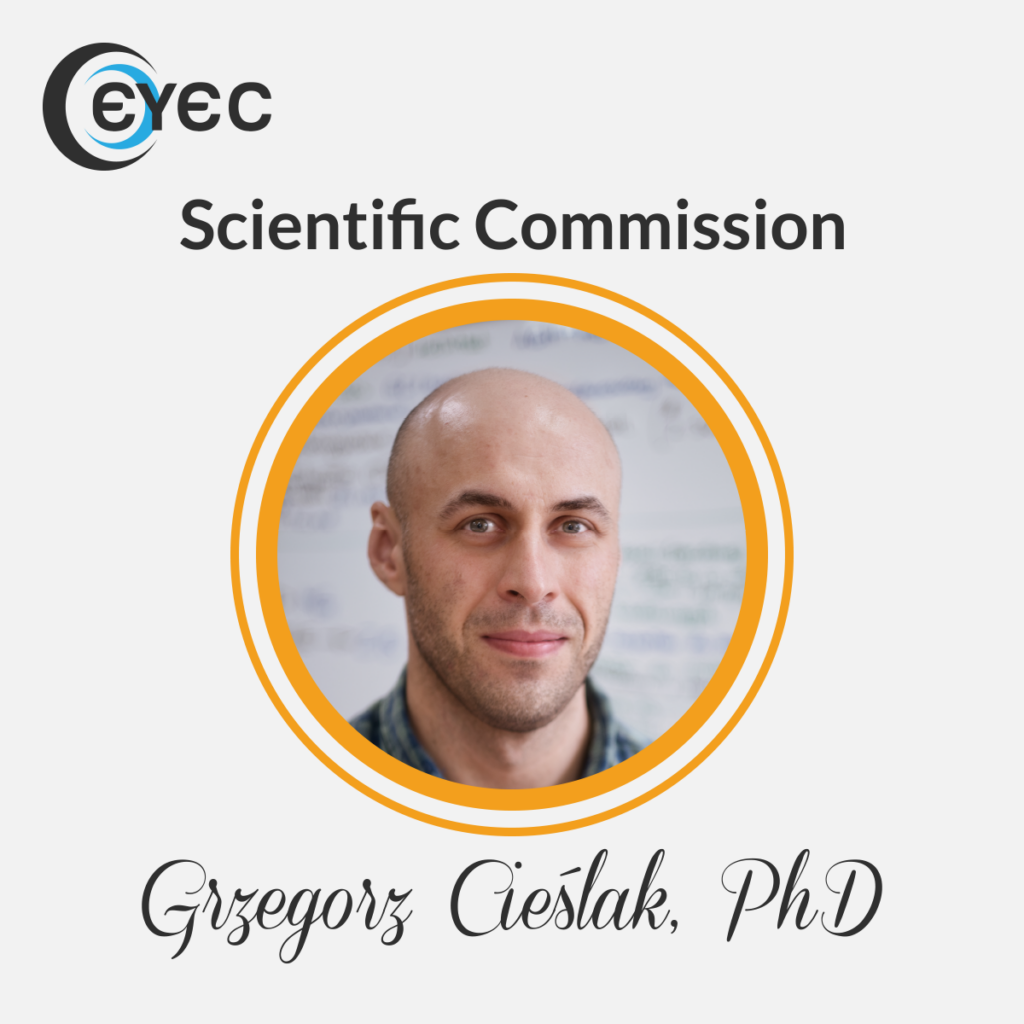
We are pleased to present Grzegorz Cieślak, PhD as a member of a scientific commission of the 12th European Young Engineers Conference!
Grzegorz Cieślak, PhD Eng., works in Centre of Electroplating Technology, Łukasiewicz Research Network – Warsaw Institute of Technology. Since the beginning of his professional career, he has been involved in issues related to the production and research of coatings deposited by chemical and electrochemical reduction methods. He has worked on new types of materials in the form of metallic coatings, including alloy and composite coatings.
His scientific achievements include co-authorship in about 40 publications, presentations at 20 conferences, 3 patents, numerous awards at invention exhibitions and participation as a contractor in several R&D projects. In his doctoral thesis defended at the Faculty of Materials Science and Engineering, Warsaw University of Technology, he dealt with the influence of graphene on the structure and selected properties of Ni/graphene composite coatings.
We are delighted to have You on board, inspiring young engineers in the pursuit of knowledge. Stay tuned for more updates and join us in welcoming Grzegorz Cieślak to our conference!
We’re thrilled to announce the media patronage of the 12th edition of EYEC with the support of UJOT FM! 🎧
UJOT FM isn’t just your typical radio station. It’s a vibrant mix of music ranging from alternative to hip-hop to heavy metal. But beyond the tunes, it’s a platform for captivating interviews, historical journeys, global expeditions, and thought-provoking discussions on pressing issues.
We’re honored to have UJOT FM join us as a media partner for the 12th edition of EYEC, enriching our conference with their distinctive voice and perspective. Stay tuned for more updates and engaging content! 🎙️
📢 Attention all participants of the European Young Engineers Conference! 📢
Today is the final day to submit your revised articles for consideration. If you haven’t already, please make sure to review and polish your work before the deadline.
Submitting your revised articles on time ensures that your research and ideas are given the attention they deserve at the conference. Don’t miss out on this opportunity to showcase your hard work and contribute to the exchange of knowledge among young engineers.
We look forward to receiving your submissions and seeing you at the conference!
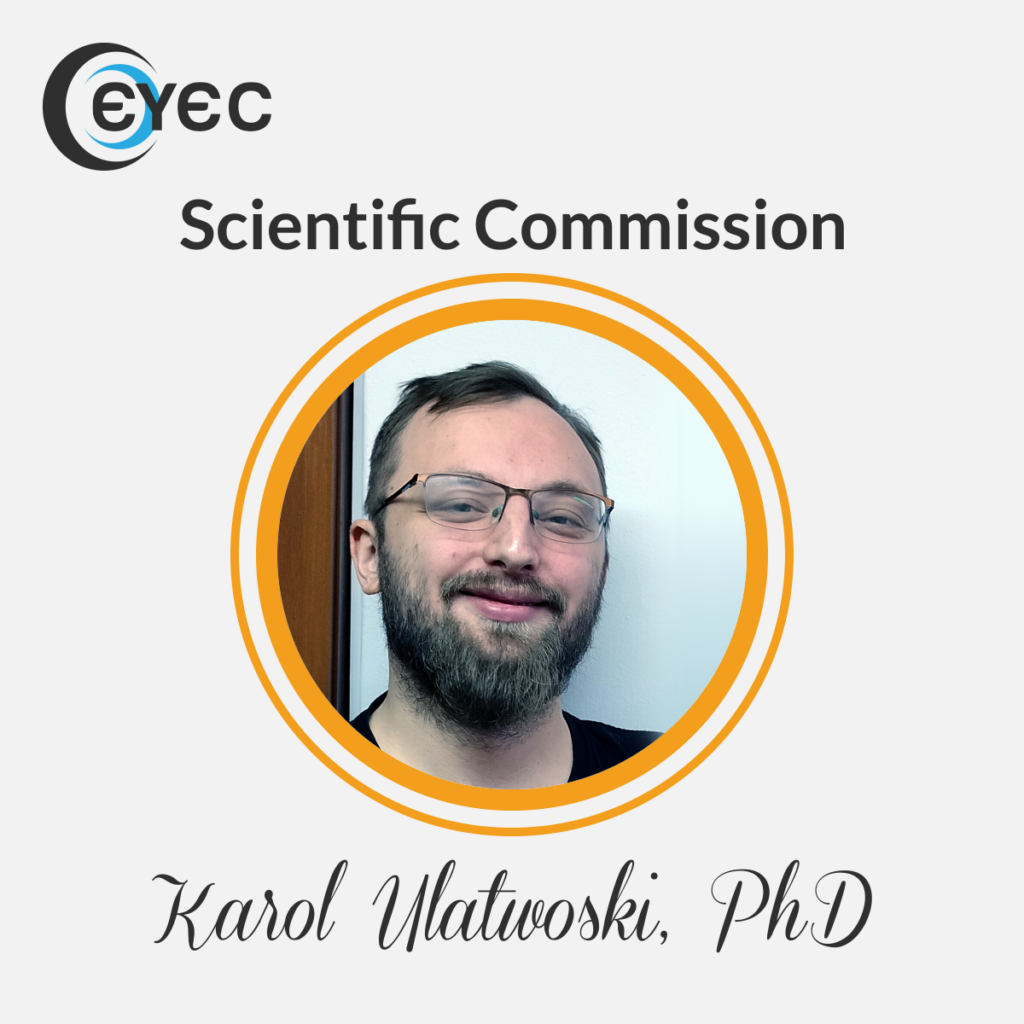
We are pleased to announce Karol Ulatowski, PhD Eng. as a member of a scientific commission of the 12th European Young Engineers Conference!
Karol Ulatowski, PhD Eng., is an employee of the Faculty of Chemical and Process Engineering, Warsaw University of Technology. He focuses his research on the bioprocesses involving the gas phase. His expertise lies in the investigation of nanobubble generation and stability mechanisms as well as their applications in life sciences. Karol is developing ways of supplying nanobubbles to the cultures of animal and plant cells, as well as microorganisms. His main goal is to be able to intensify the growth and metabolic activity of given cell cultures or microorganisms using tailored nanobubbles, which will have appropriate number, size, composition, and surface stabilizers. Such nanobubbles can then be implemented in various branches of biotechnology and the general life science industry, including food additives and drug manufacturing, medicine, agriculture as well as animal culture.
We are delighted to have You on board, inspiring young engineers in the pursuit of knowledge. Stay tuned for more updates and join us in welcoming Karol Ulatowski to our conference! 🚀
We’re delighted to share that the 12th edition of #EYEC2024 has received a honorary patronage from the Early Careers Chemical Engineers Section of the European Federation of Chemical Engineers (EFCE).
The Early Careers Chemical Engineers Section of the European Federation of Chemical Engineers (EFCE) aims to inspire, inform, upskill and influence its community members to choose a lifelong career in chemical engineering.It does this by:
Advocating and showcasing the importance of this profession in the advancement of society
Promoting top-level chemical engineering science developments
Sharing innovations in the field
Informing about new strategic technologies
Discussing interdisciplinary items
And much more!
Our friends at EFCE intend for their activities to help forge an active early career community for our members to develop their present and future capabilities. They do this by bridging the gap for graduates stepping into industry and bringing together the wide range of diverse experiences and interests of Early Career Chemical Engineers through interdisciplinary meetings, conferences and workshops.
Check out their website and see how can you contribute:
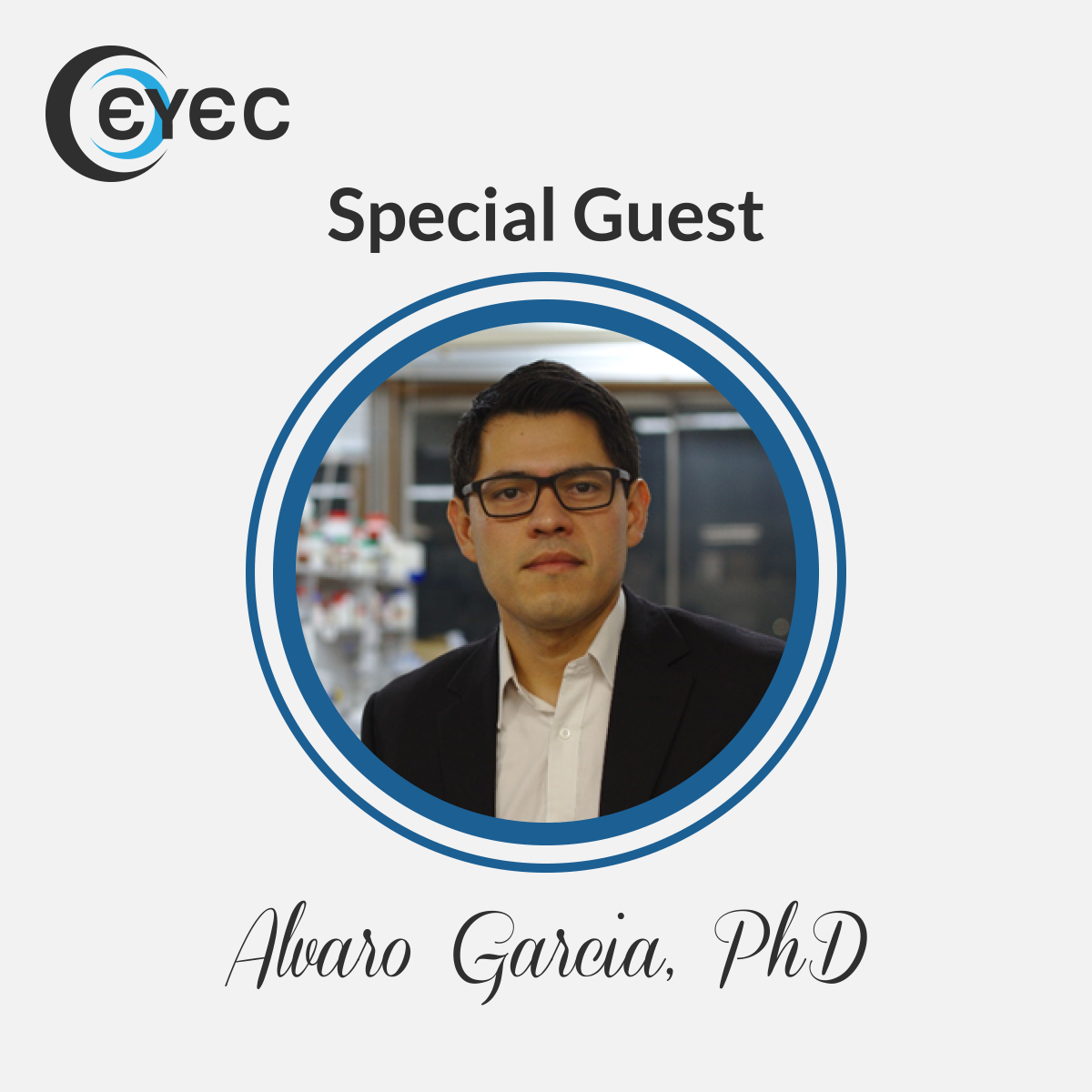
We are delighted to introduce Dr. Alvaro Garcia Cruz as a special guest of the 12th European Young Engineers Conference!
Dr. Alvaro Garcia Cruz is a scientist, technologist, and entrepreneur. He obtained his bachelor’s degree in chemistry from the Universidad of Guanajuato, Mexico, in 2008, and his master’s degree in Catalysis and Physical Chemistry from the University Claude Bernard Lyon in France in 2010. His diverse research experiences include projects in the synthesis of antibiotics at the University of Dallas (USA), biopolymers, and bio detergents at the University of Avignon (France), and core-shell nanostructures for catalysis applications at the Institute of Catalysis and Surface Chemistry in Krakow (Poland).
He completed his Ph.D. in Nano and Biotechnology at the University Claude Bernard Lyon in France, sponsored by CONACYT, with an Academic Excellence Scholarship in 2015. Subsequently, he worked as an Assistant Professor at the Institute of Catalysis and Physical Chemistry in Warsaw (Poland), focusing on electrochemical sensors and polymers in 2016. From 2017 to 2023, he served as a Senior Scientist at the University of Leicester, making significant contributions to industrial research projects and leading initiatives related to sensor technology for medical applications, detection of explosives and drugs, Microplate assay, and drug delivery, including participation in several Horizon program European and NATO projects.
In 2020, he co-founded Gamanity Health and Cosmetics, a start-up emphasizing sustainable, organic skincare, and health products, and currently serves as the UK Business Manager there. Since 2023, he has been working as a Scientific Officer at SAAT Healthcare Ltd in the UK, leading commercial expertise in Biotechnology and Medical Devices, with a focus on R&D management, compliance, and fostering strategic collaborations for innovative product development. His areas of expertise include In Vitro Diagnostics (IVD), quality management, and business development.
His research and technological endeavours focus on the development of Medical Diagnostic tools employing Optical and Electrochemical sensors, Wearable and Wireless sensors, Conducting polymers, Bioelectronics, Microplate assays, Nanoactuators, Drug delivery, Epitope mapping, and Nanozymes. With a prolific academic record, he has published over 45 peer-reviewed articles and holds 5 patents, two of which are licensed to the Biotech industry. He is a distinguished member of both the French Chemical Society and the Mexican Chemical Society.
We are delighted to have You on board, inspiring young engineers in the pursuit of knowledge. Stay tuned for more updates and join us in welcoming Alvaro Garcia Cruz to our conference! 🚀
🔍 Exciting News! 🌐 We’re thrilled to announce our newest sponsor for the European Young Engineers Conference! 🚀 A huge thank you to nLab for supporting innovation and empowering the next generation of engineers.
Since 1998 nLab delivers advanced research instrumentation. We specialize in the field of electrochemistry, corrosion research, electrochemical energy sources, tensiometry, studies of surface properties, surface plasmon resonance (SPR / L-SPR), scanning electrochemical microscopy (SECM), physico-chemical and analytical studies. We are the exclusive representative in Poland of well-known brands: Metrohm-Autolab, Metrohm- DropSens, Sensolytics, KSV-NIMA, Attension, Biolin Scientific, Insplorion. For all these products we also provide the service.

 Exciting Announcement for #EYEC2024!
 :
: